Lead Hospitality UX Designer: Crafting Exceptional Experiences
In the US job market, recruiters spend seconds scanning a resume. They look for impact (metrics), clear tech or domain skills, and education. This guide helps you build an ATS-friendly Lead Hospitality UX Designer resume that passes filters used by top US companies. Use US Letter size, one page for under 10 years experience, and no photo.
Essential Skills for Lead Hospitality UX Designer
Include these keywords in your resume to pass ATS screening and impress recruiters.
Must-Have Skills
- Communication
- Time Management
- Empathy
- Problem-Solving
- Collaboration
Technical Skills
- Figma
- Sketch
- Adobe Creative Suite
- Usability Testing Platforms
- Prototyping Tools (e.g., InVision, Axure)
Soft Skills
A Day in the Life
A typical day for a Lead Hospitality UX Designer starts with a team stand-up meeting to review project progress, address roadblocks, and prioritize tasks. Following the meeting, they might delve into user research findings from recent usability tests of the hotel booking flow, identifying pain points and areas for improvement. The afternoon could involve collaborating with product managers to refine the product roadmap based on user insights and business goals. They might also spend time mentoring junior designers, providing feedback on their work, and guiding them on design best practices. Towards the end of the day, they could participate in a design review with the engineering team, ensuring that designs are technically feasible and align with the overall system architecture. They will also carve out time to stay updated on the latest UX trends and technologies, reading articles, attending webinars, or experimenting with new design tools. The day culminates with planning for upcoming user research activities and preparing presentations for stakeholders on the UX strategy and roadmap.
Career Progression Path
Junior UX Designer
UX Designer
Senior UX Designer
Lead UX Designer
UX Manager
Director of UX
Interview Questions & Answers
Prepare for your Lead Hospitality UX Designer interview with these commonly asked questions.
Describe a time you had to advocate for user-centered design principles in the face of conflicting business priorities. How did you approach the situation, and what was the outcome?
MediumUsing the STAR method, I'd explain a situation where stakeholders wanted to rush a product launch, bypassing crucial usability testing. I presented data highlighting the potential negative impact on user adoption and satisfaction. I proposed a phased rollout with targeted usability testing in each phase. The outcome was a successful product launch with high user satisfaction and minimal post-launch issues. This demonstrated the value of user-centered design and gained stakeholder buy-in for future research initiatives.
How do you stay up-to-date with the latest UX trends and technologies?
EasyI actively follow industry publications like UX Magazine and Nielsen Norman Group. I attend relevant conferences and workshops, such as UXPA International. I also participate in online communities and forums to engage with other designers and learn from their experiences. I experiment with new tools and techniques on personal projects to expand my skillset.
Describe your experience leading a UX team. What are some of the challenges you've faced, and how did you overcome them?
MediumAs a Lead UX Designer, I've managed teams of 3-5 designers. A common challenge is balancing individual development goals with project deadlines. I address this by having regular one-on-one meetings to discuss career aspirations and providing opportunities for skill development through workshops and mentorship. I also ensure that project workloads are distributed fairly and that team members have the resources they need to succeed.
How do you measure the success of your UX designs?
MediumI use a combination of quantitative and qualitative metrics. Quantitatively, I track metrics such as conversion rates, task completion rates, and user engagement. Qualitatively, I gather user feedback through surveys, interviews, and usability testing. I analyze these data points to identify areas for improvement and measure the impact of design changes.
Tell me about a time you failed in a UX project. What did you learn from it?
HardI once led a redesign of a hotel loyalty program enrollment flow. We launched the new flow without sufficient A/B testing, and the conversion rate actually decreased. I learned the importance of rigorous testing and validation before implementing changes. We quickly reverted to the original design, conducted thorough A/B testing, and identified the specific elements that were causing the drop in conversion. We then iterated on the design based on the A/B testing results and relaunched the improved flow with a significant increase in conversion.
How do you approach designing for diverse user groups with varying accessibility needs?
MediumI prioritize accessibility from the outset of the design process. I adhere to WCAG guidelines and conduct accessibility audits throughout the development lifecycle. I also involve users with disabilities in user research to ensure that our designs meet their specific needs. I use tools like screen readers to test the usability of our designs for users with visual impairments.
What UX design trends do you see emerging in the hospitality industry?
MediumI'm seeing a growing emphasis on personalized experiences, leveraging data to tailor the user journey to individual preferences. Chatbots and AI-powered assistants are becoming more prevalent for customer support and concierge services. Contactless experiences, driven by mobile technology, are also gaining traction. Finally, there's a focus on creating immersive and engaging experiences through virtual reality and augmented reality.
ATS Optimization Tips
Make sure your resume passes Applicant Tracking Systems used by US employers.
Use standard section headings: 'Professional Experience' not 'Where I've Worked'
Include exact job title from the posting naturally in your resume
Add a Skills section with Hospitality-relevant keywords from the job description
Save as .docx or .pdf (check the application instructions)
Avoid tables, text boxes, headers/footers, and images - these confuse ATS parsers
Common Resume Mistakes to Avoid
Don't make these errors that get resumes rejected.
Lack of quantifiable results in portfolio
Not tailoring resume to the hospitality industry
Ignoring accessibility guidelines in design samples
Poor understanding of user research methodologies
Failing to showcase leadership experience effectively
Industry Outlook
The US market for Lead Hospitality UX Designer professionals remains highly competitive. Recruiters and ATS systems prioritize action verbs, quantifiable outcomes (e.g., "Reduced latency by 40%", "Led a team of 8"), and clear alignment with job descriptions. Candidates who demonstrate measurable impact and US-relevant certifications—coupled with a one-page, no-photo resume—see significantly higher callback rates in major hubs like California, Texas, and New York.
Top Hiring Companies
Recommended Resume Templates
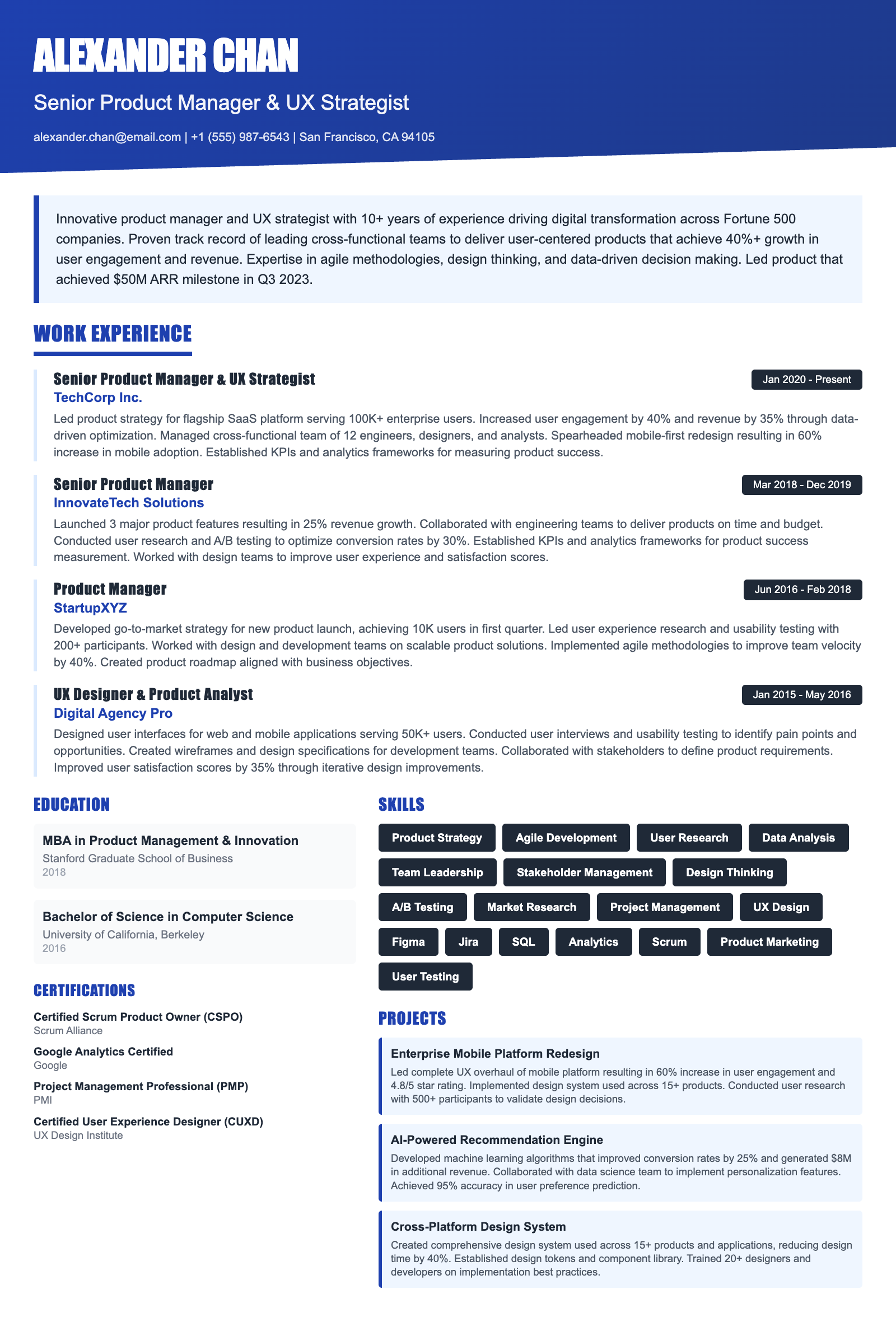
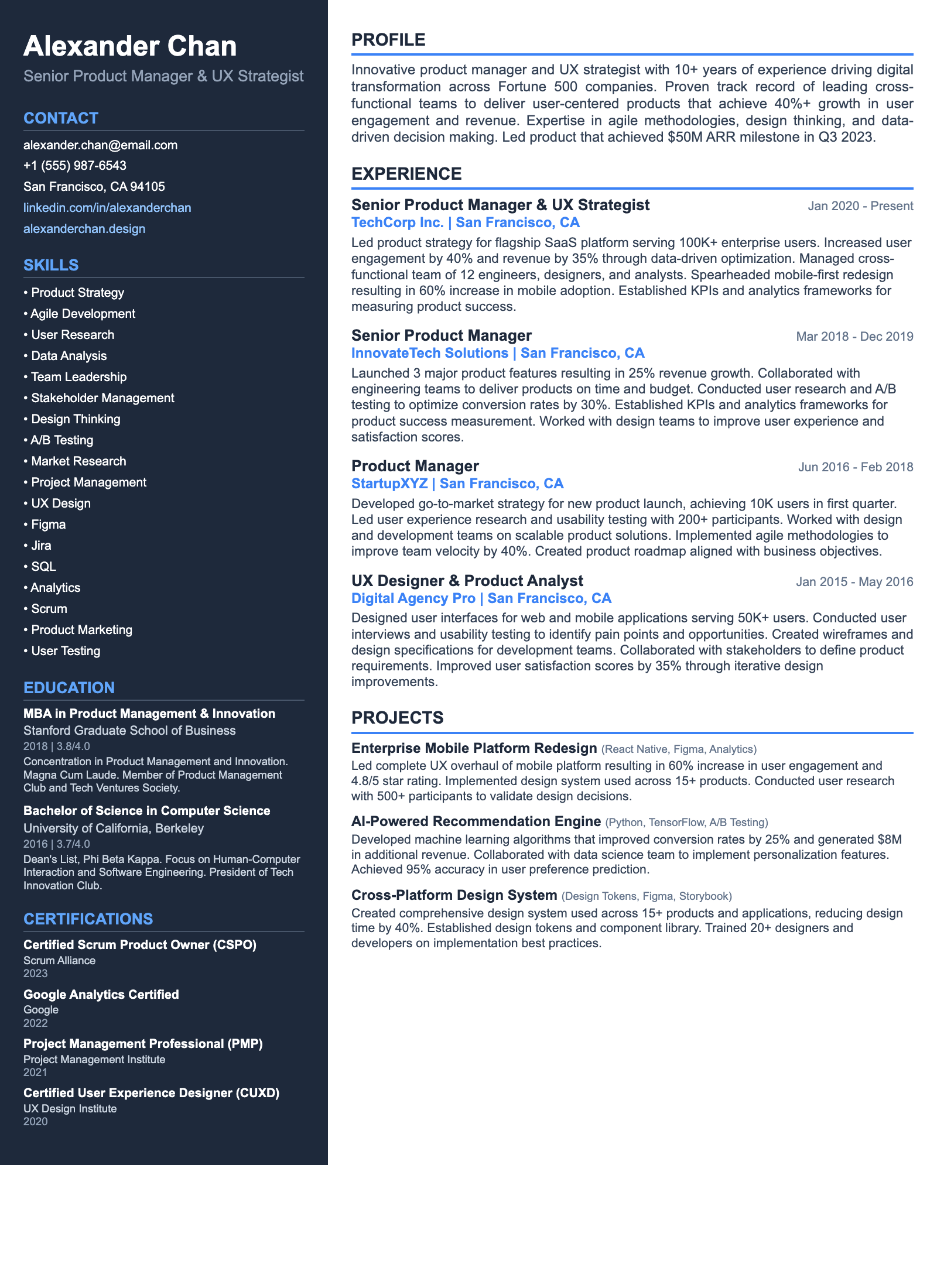
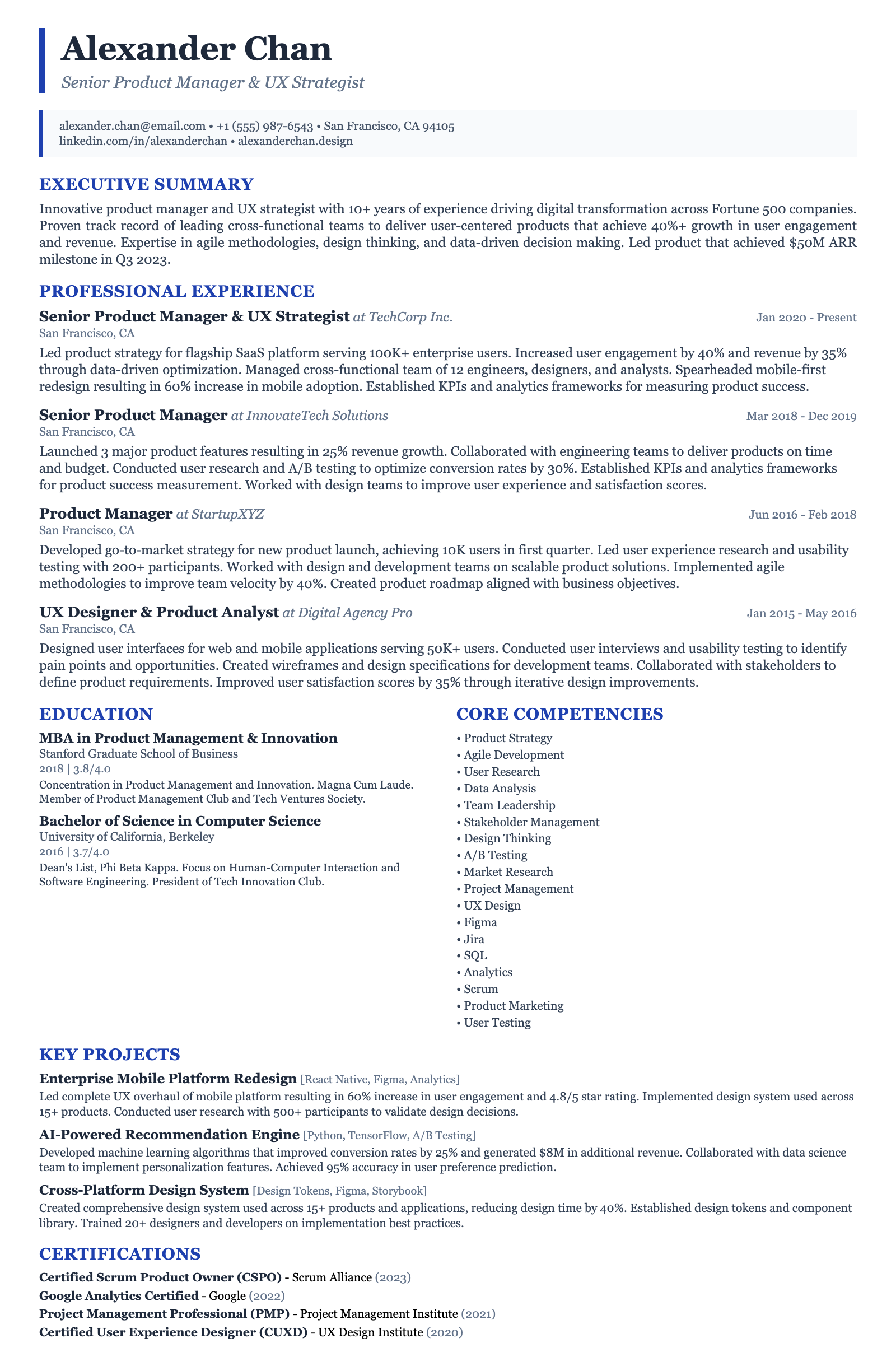
ATS-friendly templates designed specifically for Lead Hospitality UX Designer positions in the US market.
Frequently Asked Questions
What is the difference between UX and UI design?
UX (User Experience) design focuses on the overall experience a user has while interacting with a product or service. UI (User Interface) design focuses on the visual elements and interactive components that users interact with. UX encompasses UI, but also considers aspects like information architecture, usability, and user research.
What are the key principles of good UX design?
Key principles include usability (easy to use), accessibility (inclusive for all users), desirability (visually appealing and engaging), usefulness (meets user needs), and findability (easy to locate information).
What is a design system, and why is it important?
A design system is a collection of reusable components, patterns, and guidelines that ensure consistency and scalability across all digital products. It improves efficiency, reduces development time, and enhances the overall user experience.
How do you conduct user research?
User research methods include usability testing, A/B testing, surveys, interviews, card sorting, and ethnographic studies. The choice of method depends on the research goals and the stage of the design process.
What are some common UX design challenges in the hospitality industry?
Common challenges include designing for diverse user groups with varying technical skills, creating seamless experiences across multiple devices and platforms, and balancing business goals with user needs. Accessibility for people with disabilities is also a crucial consideration.
What are some important metrics for measuring the success of a hospitality UX design?
Important metrics include booking conversion rates, customer satisfaction scores, task completion rates, website bounce rates, and app usage statistics. These metrics provide insights into user behavior and identify areas for improvement.
How does user research impact the design process?
User research provides valuable insights into user needs, behaviors, and pain points. It informs design decisions, validates assumptions, and ensures that the final product meets user requirements. It helps to create user-centered designs that are effective, efficient, and enjoyable to use.
What role does accessibility play in UX design?
Accessibility is crucial in UX design to ensure that digital products and services are usable by people with disabilities. It involves following accessibility guidelines (WCAG) and incorporating accessible design principles into the design process to create inclusive experiences for all users.
Ready to Build Your Lead Hospitality UX Designer Resume?
Use our AI-powered resume builder to create an ATS-optimized resume tailored for Lead Hospitality UX Designer positions in the US market.