Launch Your Career: Junior Marketing UX Designer
Kickstart your UX career in marketing! This role blends design and marketing expertise, crafting user-centric experiences that drive business results. Perfect for detail-oriented creatives with a passion for data.
Essential Skills for Junior Marketing UX Designer
Include these keywords in your resume to pass ATS screening and impress recruiters.
Must-Have Skills
- Communication
- Time Management
- User Research
- Wireframing
- Prototyping
Technical Skills
- Figma
- Sketch
- Adobe Creative Suite
- Google Analytics
- Usability Testing Tools (e.g., UserTesting.com)
Soft Skills
A Day in the Life
A typical day might start with reviewing analytics dashboards to understand user behavior on a recent marketing campaign landing page. Then, you might participate in a brainstorming session with the marketing team to develop new ideas for improving user engagement. After lunch, you could be working on creating wireframes for a new feature on the company website, followed by conducting a remote usability testing session with a few users to gather feedback on the design. The afternoon often involves collaborating with developers to ensure that the design is implemented correctly and according to specifications. Finally, you'll wrap up the day by documenting your progress and planning for the next day's tasks, ensuring that you are staying on track with project deadlines. Throughout the day, clear and concise communication is vital to ensure the team is aligned and informed.
Career Progression Path
Junior Marketing UX Designer
Marketing UX Designer
Senior Marketing UX Designer
UX Lead
UX Manager
Director of UX
Interview Questions & Answers
Prepare for your Junior Marketing UX Designer interview with these commonly asked questions.
Tell me about a time you had to work on a project with a tight deadline. How did you manage your time and prioritize tasks?
MediumSTAR: Situation: I had to design a new landing page for a major marketing campaign with a deadline of one week. Task: My task was to create wireframes, design mockups, and conduct usability testing within that timeframe. Action: I broke down the project into smaller, manageable tasks, prioritized the most critical elements, and communicated regularly with the team to ensure we were all on the same page. Result: I successfully delivered the landing page on time and within budget, and the campaign saw a significant increase in conversions.
Describe your experience with user research. What methods have you used, and what insights have you gained?
MediumSTAR: Situation: I was working on redesigning the user onboarding flow for a mobile app. Task: My task was to understand user pain points and identify areas for improvement. Action: I conducted user interviews, surveys, and usability testing sessions to gather data. Result: I identified several key areas where users were struggling, which led to significant improvements in the onboarding experience and a higher user retention rate.
How do you stay up-to-date with the latest UX design trends and technologies?
EasyI regularly read UX design blogs, attend industry conferences and webinars, and participate in online communities. I also experiment with new design tools and technologies to stay ahead of the curve. I also follow leaders in the UX field on social media and subscribe to relevant newsletters.
Can you describe a project where you had to advocate for the user's needs? What was the outcome?
MediumSTAR: Situation: During the redesign of a website, stakeholders wanted to prioritize business goals over user needs, suggesting a complex navigation structure. Task: I needed to advocate for a simpler, more user-friendly navigation. Action: I presented user research data, highlighting the potential negative impact of the proposed navigation on user experience and conversion rates. I also created alternative navigation prototypes based on user feedback. Result: Stakeholders were convinced by the data and prototypes, and we implemented a simpler, more intuitive navigation that improved user satisfaction and engagement.
Explain your understanding of A/B testing and its role in UX design.
MediumA/B testing involves comparing two versions of a design element (e.g., button color, headline text) to see which performs better with users. It's crucial for making data-driven decisions and optimizing user experience. I understand how to set up A/B tests, analyze results, and iterate on designs based on the findings.
What is your approach to designing for accessibility?
MediumI prioritize accessibility by adhering to WCAG guidelines. This includes using appropriate color contrast, providing alt text for images, ensuring keyboard navigation, and using semantic HTML. I believe accessibility is not just a requirement but an ethical responsibility to create inclusive experiences for all users.
Describe a time you received negative feedback on your design. How did you handle it, and what did you learn?
MediumSTAR: Situation: During a design review, a stakeholder criticized my initial design concept for being too complex and not aligning with the brand's aesthetic. Task: I needed to understand their concerns and incorporate their feedback effectively. Action: I actively listened to their feedback, asked clarifying questions to understand their perspective, and revisited my design with their concerns in mind. Result: I revised the design to better align with the brand's aesthetic while still maintaining a user-friendly experience. I learned the importance of being open to feedback and using it to improve my designs.
ATS Optimization Tips
Make sure your resume passes Applicant Tracking Systems used by US employers.
Use standard section headings: 'Professional Experience' not 'Where I've Worked'
Include exact job title from the posting naturally in your resume
Add a Skills section with Marketing-relevant keywords from the job description
Save as .docx or .pdf (check the application instructions)
Avoid tables, text boxes, headers/footers, and images - these confuse ATS parsers
Common Resume Mistakes to Avoid
Don't make these errors that get resumes rejected.
Lack of a portfolio showcasing UX projects.
Failing to quantify results in resume bullet points.
Not tailoring the resume to the specific job description.
Poor grammar and spelling errors.
Insufficient explanation of the design process used in projects.
Industry Outlook
The US market for Junior Marketing UX Designer professionals remains highly competitive. Recruiters and ATS systems prioritize action verbs, quantifiable outcomes (e.g., "Reduced latency by 40%", "Led a team of 8"), and clear alignment with job descriptions. Candidates who demonstrate measurable impact and US-relevant certifications—coupled with a one-page, no-photo resume—see significantly higher callback rates in major hubs like California, Texas, and New York.
Top Hiring Companies
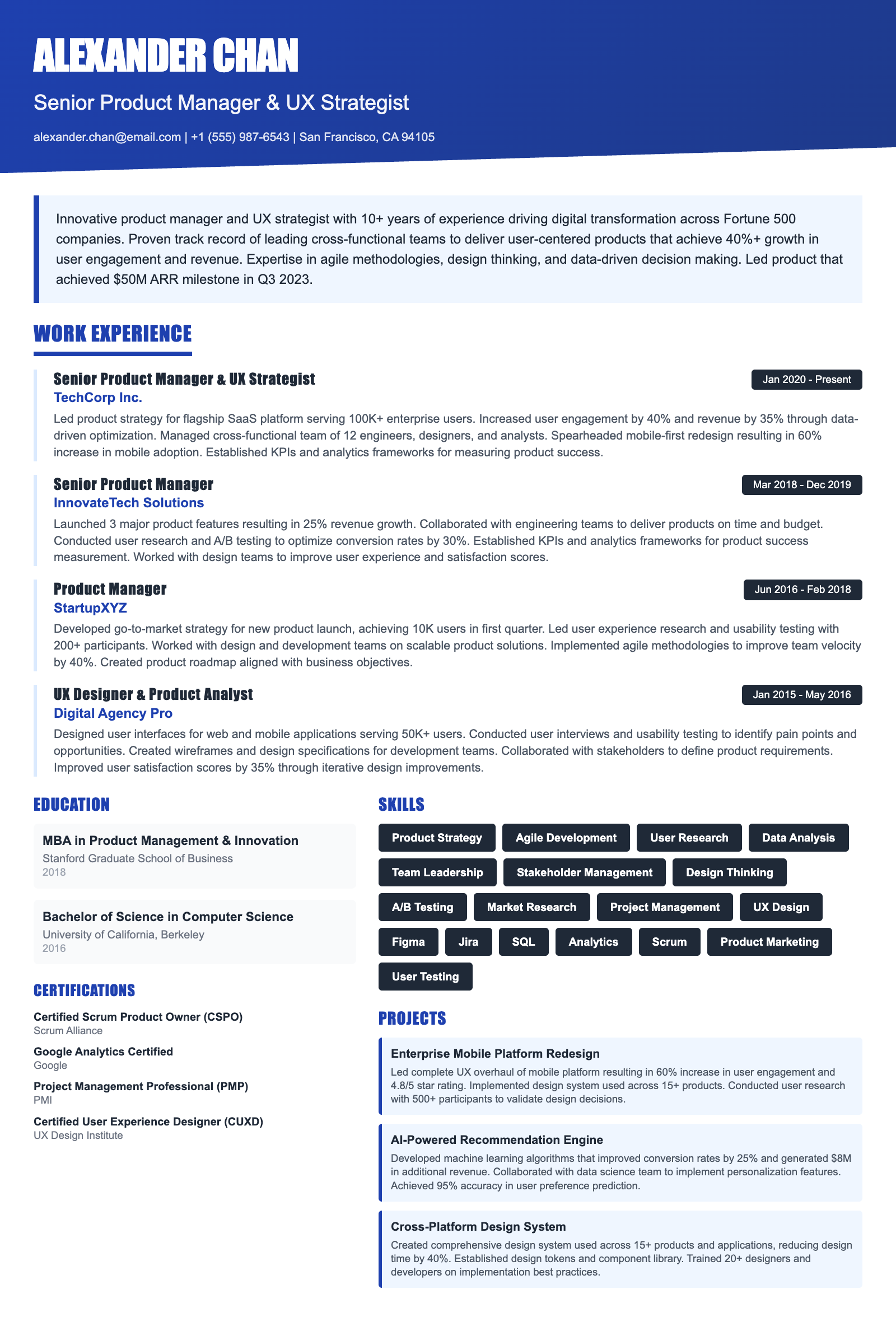
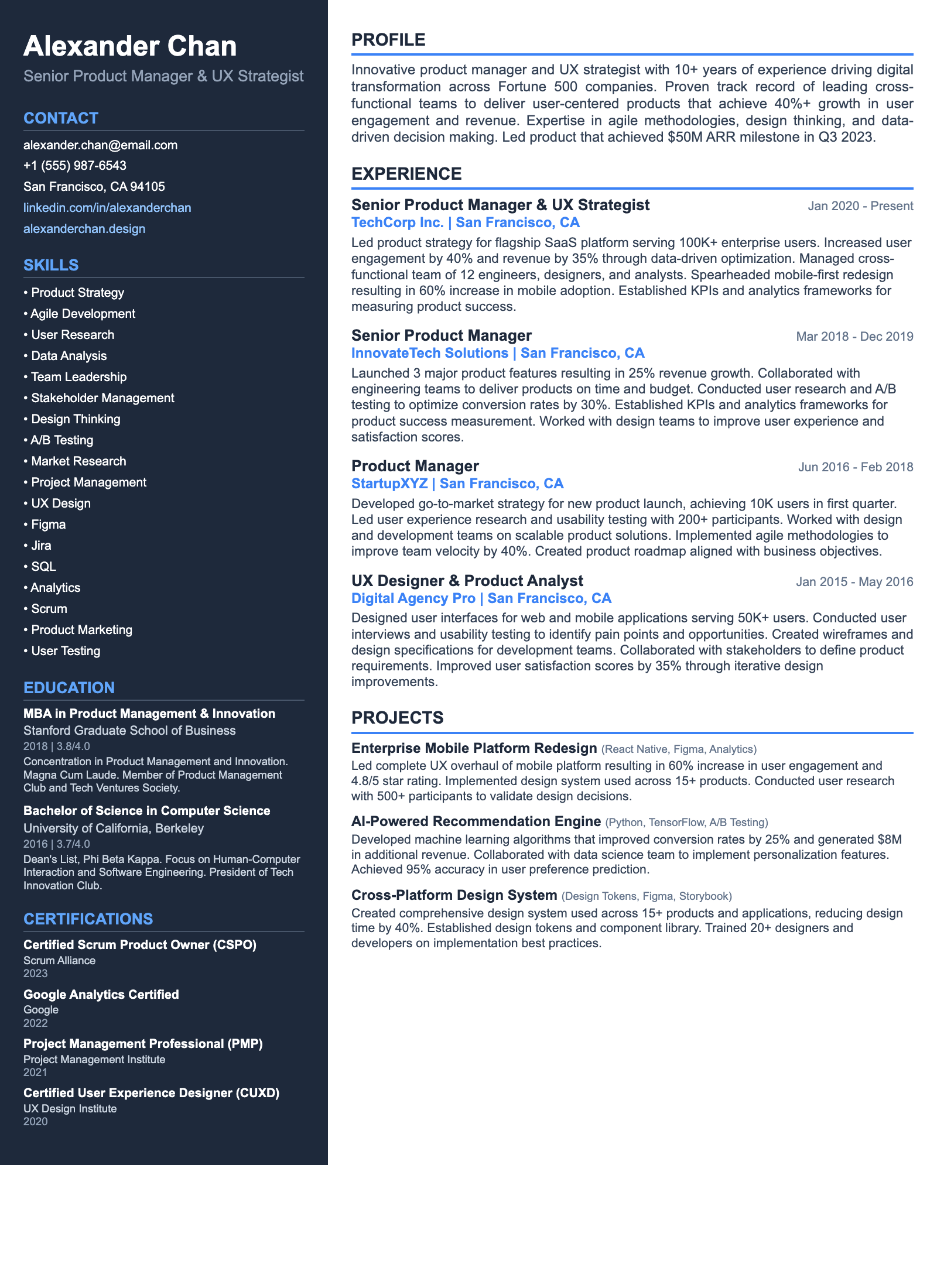
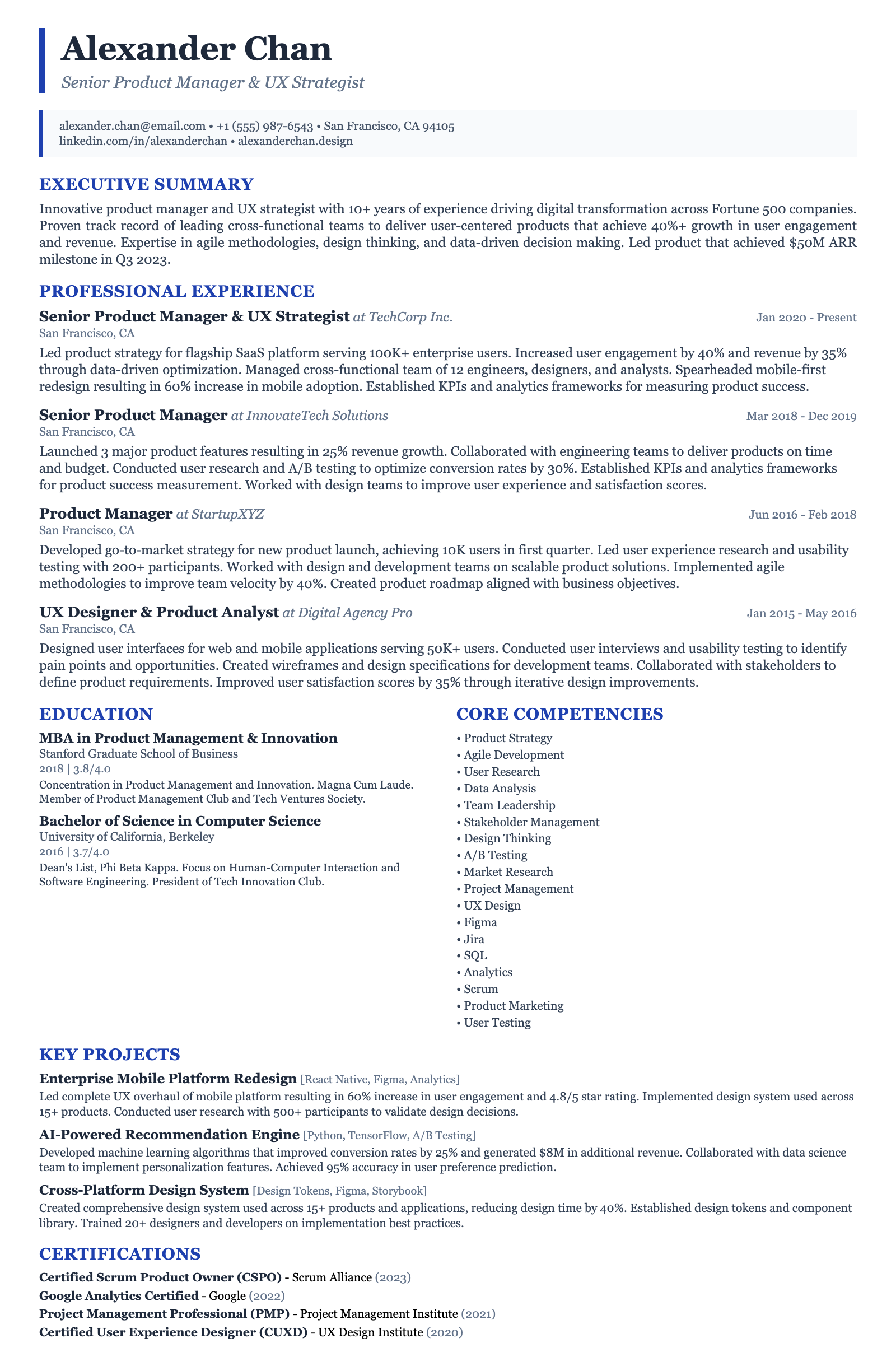
Recommended Resume Templates
ATS-friendly templates designed specifically for Junior Marketing UX Designer positions in the US market.
Frequently Asked Questions
What is the difference between UX and UI design?
UX (User Experience) design focuses on the overall experience a user has while interacting with a product or service. UI (User Interface) design focuses on the visual elements and interactive components of a user interface.
What are the key skills needed for a Junior Marketing UX Designer role?
Key skills include user research, wireframing, prototyping, usability testing, communication, and collaboration. Technical skills include proficiency in design tools like Figma, Sketch, and Adobe Creative Suite.
How important is a portfolio for this role?
A portfolio is extremely important, showcasing your design skills and process. It should include examples of your work, demonstrating your ability to solve design problems and create user-friendly interfaces.
What is the typical career path for a Marketing UX Designer?
The typical career path progresses from Junior Marketing UX Designer to Marketing UX Designer, Senior Marketing UX Designer, UX Lead, UX Manager, and eventually Director of UX.
How can I prepare for a UX design interview?
Prepare by practicing your storytelling skills using the STAR method, reviewing your portfolio, and researching the company and its products. Be ready to discuss your design process and explain your design decisions.
What are some common tools used by UX designers?
Common tools include Figma, Sketch, Adobe XD, Adobe Creative Suite, InVision, and usability testing platforms like UserTesting.com.
What is the role of data in UX design?
Data plays a crucial role in UX design. It helps designers understand user behavior, identify areas for improvement, and make data-driven design decisions. This includes using analytics tools and conducting user research.
How does marketing knowledge benefit a UX designer?
Understanding marketing principles allows UX designers to create experiences that not only delight users but also achieve business goals. It helps them design interfaces that drive conversions, increase engagement, and improve customer satisfaction.
Ready to Build Your Junior Marketing UX Designer Resume?
Use our AI-powered resume builder to create an ATS-optimized resume tailored for Junior Marketing UX Designer positions in the US market.