
Junior Manufacturing Data Scientist: Launch Your Career
Kickstart your data science career in the manufacturing sector! This entry-level role offers hands-on experience analyzing production data, optimizing processes, and contributing to data-driven decision-making. Prepare to make a real impact on efficiency and innovation.
Essential Skills for Junior Manufacturing Data Scientist
Include these keywords in your resume to pass ATS screening and impress recruiters.
Must-Have Skills
- Statistical Analysis
- Data Visualization
- Problem-Solving
- Communication
- Time Management
Technical Skills
- Python (Pandas, Scikit-learn)
- SQL
- Tableau/Power BI
- Machine Learning Algorithms
- Cloud Computing (AWS/Azure/GCP)
Soft Skills
A Day in the Life
Imagine starting your day by reviewing the latest production data from the factory floor. You notice a slight dip in efficiency on one of the assembly lines. After a quick meeting with the process engineering team, you dive into the data, using SQL to query the database and extract relevant information. You then use Python and Pandas to clean and transform the data, preparing it for analysis. You build a predictive model using scikit-learn to identify the root causes of the efficiency dip, considering factors like machine downtime, raw material quality, and operator performance. The model reveals a correlation between a specific batch of raw materials and the reduced efficiency. You present your findings to the team, suggesting a change in raw material suppliers. Later, you work on visualizing the data in a Tableau dashboard, making the insights accessible to all stakeholders. You spend the afternoon brainstorming new ways to leverage machine learning to optimize predictive maintenance schedules, ensuring minimal downtime and maximum productivity. Finally, you document your work and prepare for tomorrow's data exploration challenges.
Career Progression Path
Junior Manufacturing Data Scientist
Data Scientist
Senior Data Scientist
Data Science Manager
Interview Questions & Answers
Prepare for your Junior Manufacturing Data Scientist interview with these commonly asked questions.
Describe a time you used data analysis to solve a problem.
MediumSTAR Method: Situation: Faced with declining production yield. Task: Identify the root cause using data analysis. Action: Collected data on machine performance, raw materials, and operator actions. Analyzed the data using regression analysis and discovered a correlation between a specific machine setting and yield. Result: Adjusted the machine setting, resulting in a 15% increase in production yield.
Explain your experience with machine learning algorithms.
MediumI have experience with various machine learning algorithms, including linear regression, logistic regression, decision trees, random forests, and support vector machines. I've used these algorithms for tasks such as predictive maintenance, anomaly detection, and process optimization. For instance, I built a random forest model to predict equipment failures based on sensor data, achieving an accuracy of 90%.
How do you handle missing data?
MediumMissing data can significantly impact the accuracy of analysis. I typically handle missing data using techniques such as imputation (mean, median, mode), deletion (if the missing data is minimal and random), or using algorithms that can handle missing values directly. The best approach depends on the nature and extent of the missing data and the specific analysis being performed.
Describe a challenging data project you worked on and how you overcame the challenges.
HardI worked on a project to predict product quality using data from various stages of the manufacturing process. The challenge was dealing with highly imbalanced data, where defects were rare. I addressed this by using techniques like oversampling the minority class (defects) and using algorithms that are robust to imbalanced data, such as SMOTE. This significantly improved the model's accuracy in predicting defects.
How do you ensure data quality?
MediumEnsuring data quality involves several steps. First, it's crucial to understand the data sources and their limitations. Then, I use techniques like data validation, data cleaning, and data transformation to ensure the data is accurate and consistent. I also perform regular data quality checks to identify and address any issues proactively.
Explain your experience with data visualization tools.
EasyI am proficient in using data visualization tools like Tableau and Power BI. I have used these tools to create interactive dashboards and reports that communicate key insights to stakeholders. For example, I created a dashboard that tracks key performance indicators (KPIs) for a manufacturing process, allowing stakeholders to quickly identify areas for improvement.
How do you stay current with the latest advancements in data science?
EasyI stay current by reading industry blogs, attending conferences and webinars, taking online courses, and participating in online communities. I also experiment with new technologies and techniques on personal projects to gain hands-on experience.
ATS Optimization Tips
Make sure your resume passes Applicant Tracking Systems used by US employers.
Use standard section headings: 'Professional Experience' not 'Where I've Worked'
Include exact job title from the posting naturally in your resume
Add a Skills section with Manufacturing-relevant keywords from the job description
Save as .docx or .pdf (check the application instructions)
Avoid tables, text boxes, headers/footers, and images - these confuse ATS parsers
Common Resume Mistakes to Avoid
Don't make these errors that get resumes rejected.
Lack of quantifiable results in resume bullets
Not tailoring the resume to the specific manufacturing role
Omitting relevant technical skills (e.g., SQL, Python)
Failing to highlight experience with manufacturing data (MES, ERP)
Poor formatting and lack of clear structure
Industry Outlook
The US market for Junior Manufacturing Data Scientist professionals remains highly competitive. Recruiters and ATS systems prioritize action verbs, quantifiable outcomes (e.g., "Reduced latency by 40%", "Led a team of 8"), and clear alignment with job descriptions. Candidates who demonstrate measurable impact and US-relevant certifications—coupled with a one-page, no-photo resume—see significantly higher callback rates in major hubs like California, Texas, and New York.
Top Hiring Companies
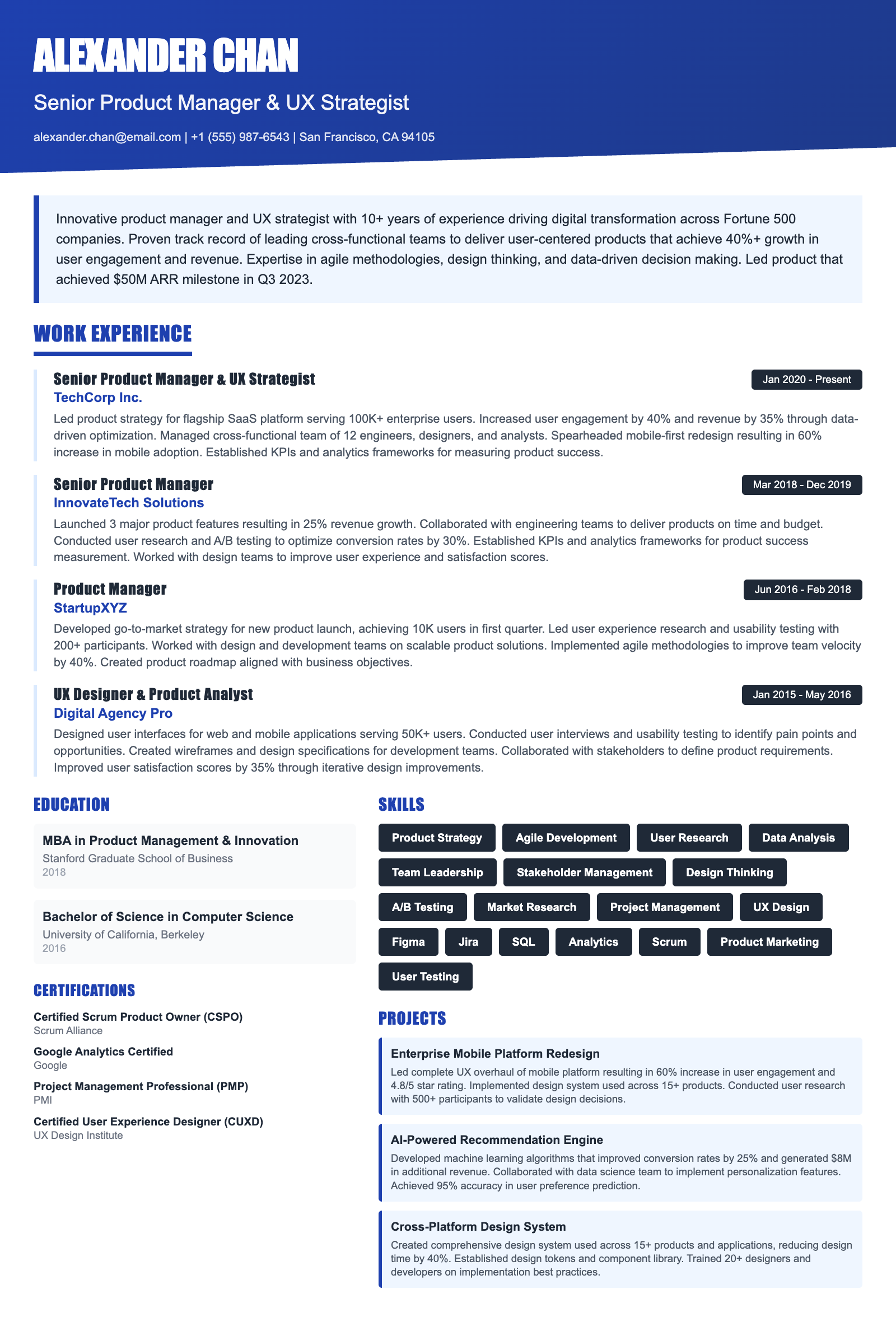
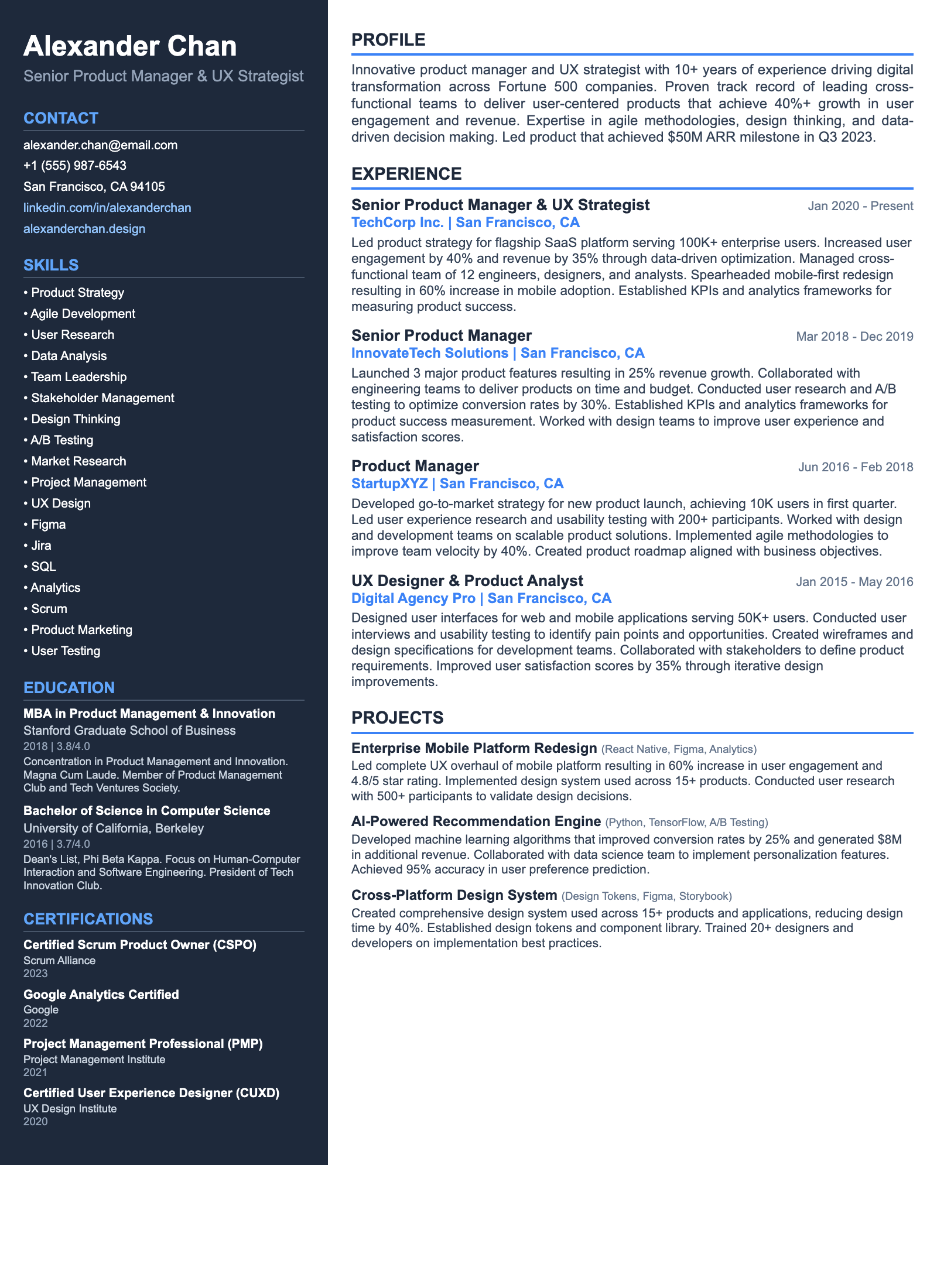
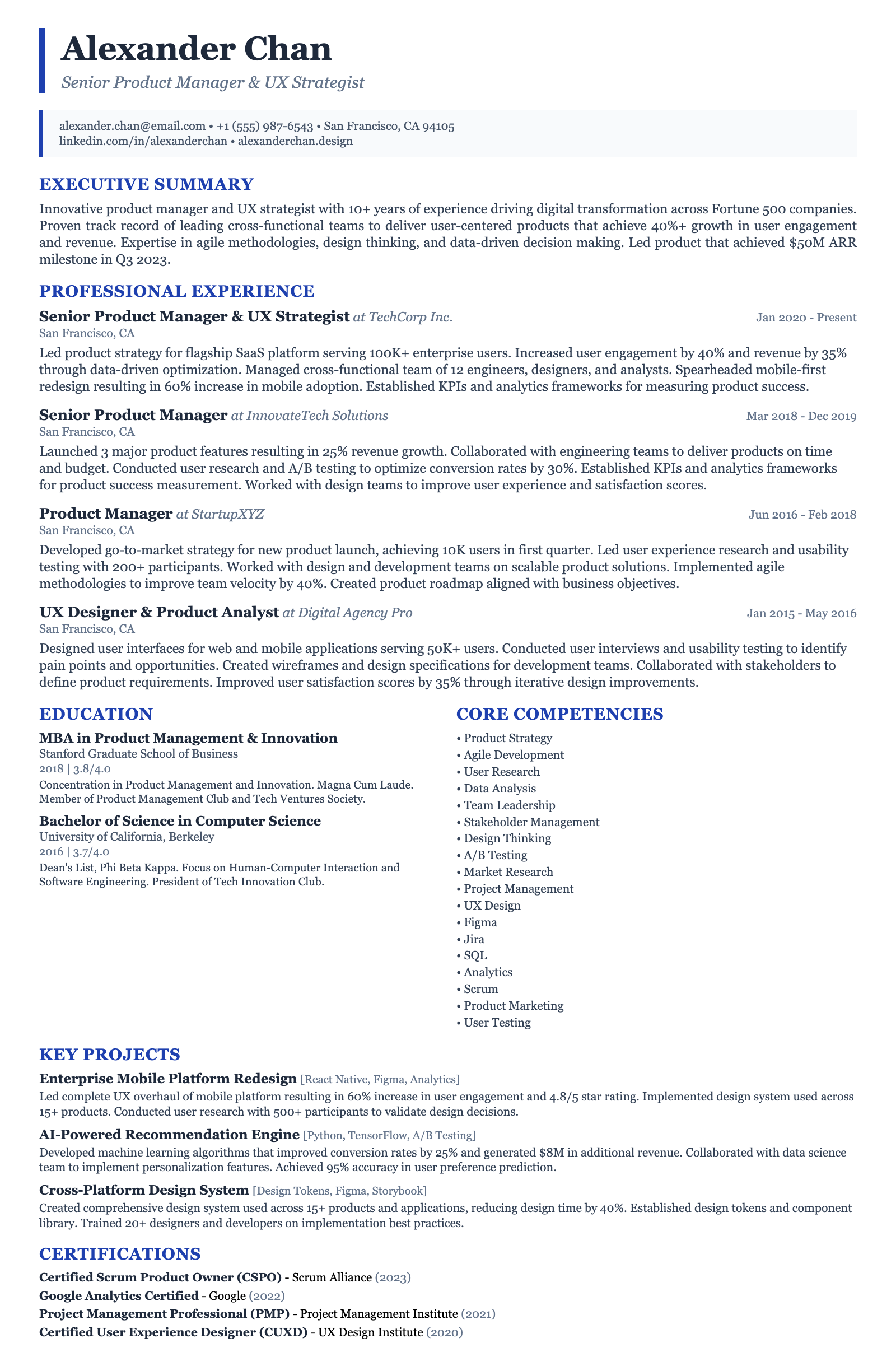
Recommended Resume Templates
ATS-friendly templates designed specifically for Junior Manufacturing Data Scientist positions in the US market.
Frequently Asked Questions
What skills are most important for a Junior Manufacturing Data Scientist?
Strong analytical skills, proficiency in Python and SQL, experience with data visualization tools, and a solid understanding of statistical concepts are crucial. Excellent communication and problem-solving skills are also essential for collaborating with stakeholders and translating data insights into actionable recommendations.
What type of data will I be working with?
You'll be working with a variety of data types, including sensor data, machine data, process data, quality data, and production data. This data is typically stored in databases, data warehouses, or cloud storage platforms.
What is the typical career path for a Manufacturing Data Scientist?
The typical career path starts with a Junior Data Scientist role and progresses to Data Scientist, Senior Data Scientist, and eventually Data Science Manager or Director. With experience and expertise, you can also move into more specialized roles such as Machine Learning Engineer or AI Architect.
What is the work environment like?
The work environment is typically collaborative and fast-paced. You'll be working closely with manufacturing engineers, process engineers, and other stakeholders to solve real-world problems. You'll also have opportunities to learn and grow as you work on challenging and impactful projects.
How can I prepare for a Junior Manufacturing Data Scientist interview?
Prepare by reviewing your technical skills, practicing common interview questions, and researching the company and the role. Be prepared to discuss your experience with data analysis, machine learning, and data visualization. Also, be ready to explain how you would approach solving specific manufacturing problems using data.
What are the key challenges in manufacturing data science?
Some key challenges include dealing with noisy and incomplete data, handling large datasets, and translating data insights into actionable recommendations that can be implemented on the factory floor. Also, ensuring the security and privacy of sensitive manufacturing data is crucial.
Is a Master's degree required for this role?
While a Master's degree in a related field (e.g., Data Science, Statistics, Engineering) can be beneficial, it is not always required. A strong foundation in mathematics, statistics, and computer science, coupled with relevant experience, can be sufficient for landing a Junior Manufacturing Data Scientist role.
What programming languages are essential for this role?
Python is the most essential programming language, particularly libraries like Pandas, NumPy, and Scikit-learn. SQL is also crucial for querying and manipulating data from databases. Familiarity with R is a plus but not always required.
Ready to Build Your Junior Manufacturing Data Scientist Resume?
Use our AI-powered resume builder to create an ATS-optimized resume tailored for Junior Manufacturing Data Scientist positions in the US market.