Land Your Dream: Junior Hospitality Product Manager Role
In the US job market, recruiters spend seconds scanning a resume. They look for impact (metrics), clear tech or domain skills, and education. This guide helps you build an ATS-friendly Junior Hospitality Product Manager resume that passes filters used by top US companies. Use US Letter size, one page for under 10 years experience, and no photo.
Essential Skills for Junior Hospitality Product Manager
Include these keywords in your resume to pass ATS screening and impress recruiters.
Must-Have Skills
- Communication
- Time Management
Technical Skills
- Jira
- Google Analytics
Soft Skills
A Day in the Life
My day begins with reviewing overnight analytics, checking product performance metrics, and identifying any immediate issues that need addressing. Then, I join the daily stand-up meeting with the engineering team to discuss progress on current sprints and address any roadblocks. A significant portion of my morning is dedicated to analyzing user feedback from recent A/B tests on our mobile app's booking flow. After lunch, I collaborate with the design team on mockups for a new feature aimed at personalizing guest recommendations. In the afternoon, I prepare a presentation for senior management, outlining the results of our latest product launch and proposing strategies for further optimization. The day typically ends with documenting key decisions and planning for the next day's activities, ensuring alignment with the overall product roadmap and strategic goals. This involves a constant juggle between technical tasks, creative problem-solving, and strategic communication.
Career Progression Path
Junior Product Manager
Product Manager
Senior Product Manager
Product Lead
Director of Product
Interview Questions & Answers
Prepare for your Junior Hospitality Product Manager interview with these commonly asked questions.
Tell me about a time you had to prioritize competing tasks under pressure.
MediumDuring the last sprint, we were simultaneously working on a new feature launch and addressing a critical bug in the existing system. I used a prioritization matrix, considering impact and urgency, to determine that fixing the bug was the immediate priority. I communicated this decision to the team, explaining the rationale and re-allocating resources accordingly. This ensured minimal disruption to users while still keeping the new feature launch on track. The key was clear communication and data-driven decision-making.
Describe your experience with A/B testing and how you've used it to improve a product.
MediumIn my previous role, we used A/B testing to optimize the conversion rate of our booking page. We hypothesized that simplifying the form would reduce drop-off. We created two versions: a shorter form with fewer fields and the original, longer form. After running the test for two weeks, the shorter form showed a 15% increase in conversion rates. We then implemented the shorter form, resulting in a measurable improvement in bookings.
How do you stay up-to-date with the latest trends in the hospitality industry?
EasyI actively follow industry publications like Hotel News Now and Skift, subscribe to hospitality-focused newsletters, and attend industry conferences and webinars. I also monitor competitor activities and engage in online communities to stay informed about emerging technologies and changing customer preferences.
Explain your understanding of the product development lifecycle.
EasyMy understanding is that it encompasses ideation, research, planning, design, development, testing, deployment, and iteration. Each stage is crucial and requires collaboration across different teams. I'm familiar with agile methodologies and have experience contributing to each phase of the lifecycle.
How would you approach gathering user feedback for a new hospitality product?
MediumI would use a multi-faceted approach, including user surveys, interviews, focus groups, and usability testing. I'd also leverage analytics data to understand how users are interacting with the product. It's essential to gather both qualitative and quantitative data to gain a comprehensive understanding of user needs and pain points.
What are some key metrics you would track to measure the success of a hospitality product?
MediumKey metrics would include customer satisfaction (measured through surveys and reviews), booking conversion rates, average order value, customer lifetime value, and user engagement metrics (such as time spent on the app or website). Monitoring these metrics provides insights into product performance and areas for improvement.
Describe a time you had to make a difficult decision with limited data.
HardWe were considering launching a new loyalty program, but market research was inconclusive. I analyzed existing customer data and competitor offerings to create a risk assessment. I presented the findings to the team, highlighting the potential benefits and risks. Based on this analysis, we decided to launch a pilot program in a limited market to gather more data before a full-scale rollout. This allowed us to mitigate risk and make a more informed decision.
How do you handle conflicting opinions within a product team?
MediumI believe in fostering open communication and creating a safe space for team members to share their perspectives. I would actively listen to each viewpoint, understand the underlying rationale, and facilitate a discussion to find common ground. Ultimately, the decision should be based on data and aligned with the overall product strategy.
ATS Optimization Tips
Make sure your resume passes Applicant Tracking Systems used by US employers.
Use standard section headings: 'Professional Experience' not 'Where I've Worked'
Include exact job title from the posting naturally in your resume
Add a Skills section with Hospitality-relevant keywords from the job description
Save as .docx or .pdf (check the application instructions)
Avoid tables, text boxes, headers/footers, and images - these confuse ATS parsers
Common Resume Mistakes to Avoid
Don't make these errors that get resumes rejected.
Lack of quantifiable results in resume bullets.
Focusing on tasks rather than accomplishments.
Ignoring hospitality-specific experience (even if it's entry-level).
Poorly formatted or generic resume template.
Not tailoring the resume to the specific job description.
Industry Outlook
The US market for Junior Hospitality Product Manager professionals remains highly competitive. Recruiters and ATS systems prioritize action verbs, quantifiable outcomes (e.g., "Reduced latency by 40%", "Led a team of 8"), and clear alignment with job descriptions. Candidates who demonstrate measurable impact and US-relevant certifications—coupled with a one-page, no-photo resume—see significantly higher callback rates in major hubs like California, Texas, and New York.
Top Hiring Companies
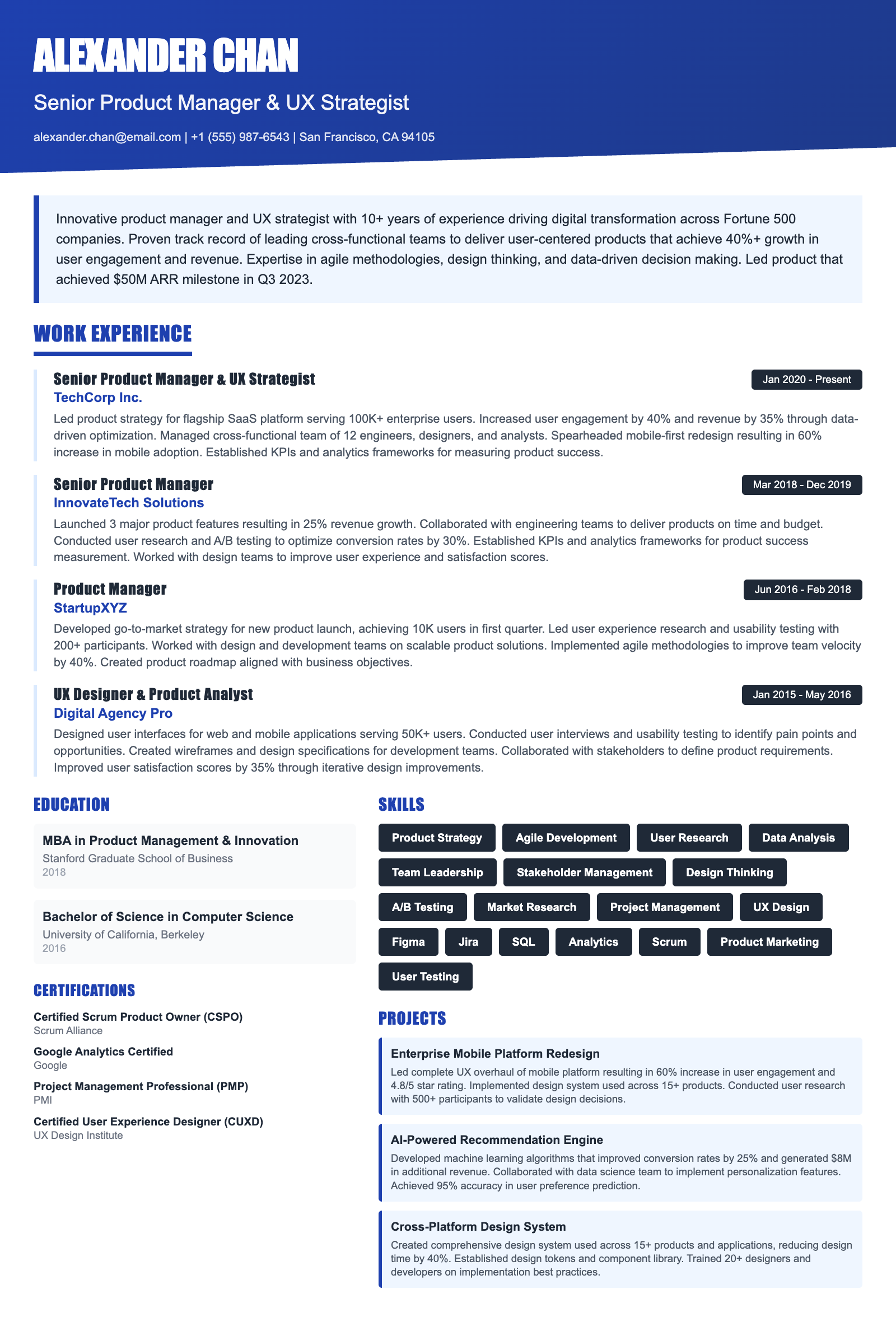
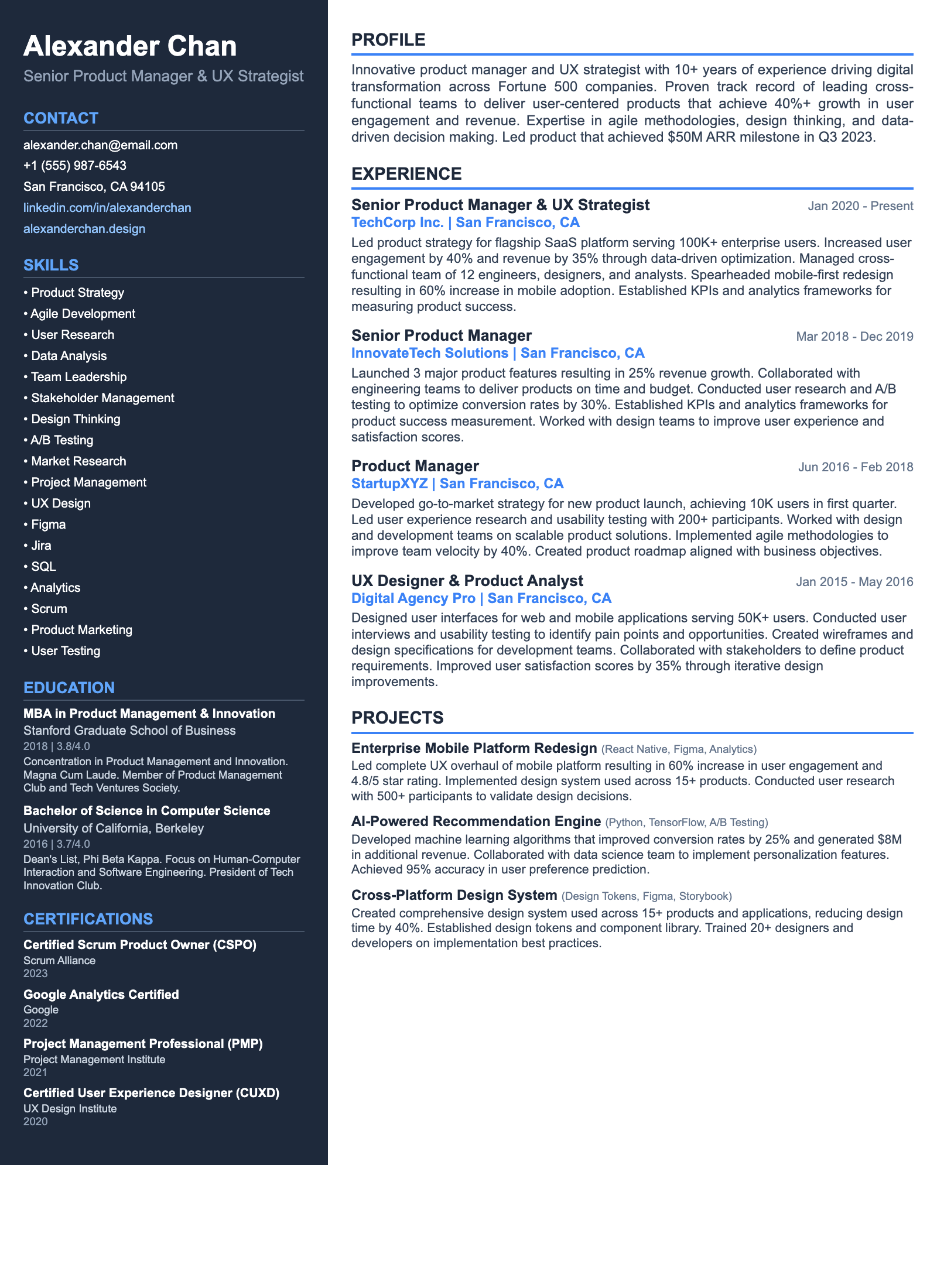
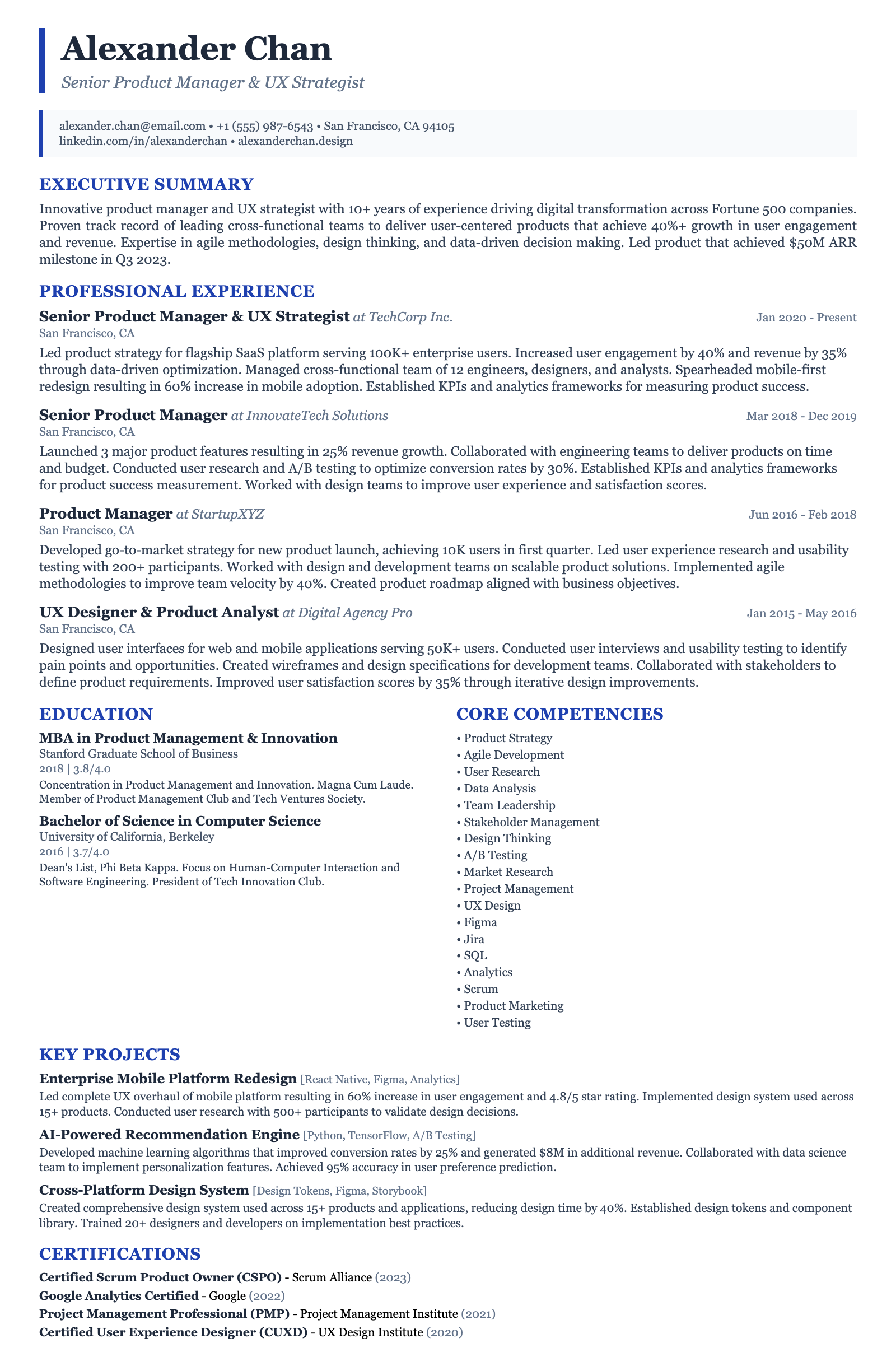
Recommended Resume Templates
ATS-friendly templates designed specifically for Junior Hospitality Product Manager positions in the US market.
Frequently Asked Questions
What education is typically required for a Junior Hospitality Product Manager role?
A bachelor's degree in business administration, hospitality management, computer science, or a related field is generally required. Some employers may prefer candidates with a master's degree.
What are the key skills needed to succeed in this role?
Strong analytical skills, communication skills, problem-solving abilities, and a passion for the hospitality industry are essential. Familiarity with product management methodologies and tools is also beneficial.
What is the typical career progression for a Hospitality Product Manager?
Starting as a Junior Product Manager, you can progress to Product Manager, Senior Product Manager, Product Lead, and eventually Director of Product. Each step involves increased responsibility and strategic influence.
What is the difference between a Product Manager and a Project Manager?
A Product Manager focuses on the 'why' and 'what' of a product, defining the vision and strategy. A Project Manager focuses on the 'how' and 'when,' managing the execution and timeline of a project.
How important is experience in the hospitality industry for this role?
While not always mandatory, prior experience in the hospitality industry is highly valued. It provides valuable insights into customer needs, industry trends, and operational considerations.
What are some common challenges faced by Hospitality Product Managers?
Balancing conflicting stakeholder priorities, adapting to rapidly changing market trends, and managing complex product development processes are common challenges.
What are some valuable certifications for aspiring Product Managers?
Certified Scrum Product Owner (CSPO) and Pragmatic Marketing certifications are highly regarded within the product management community.
How can I gain relevant experience if I don't have a formal product management background?
Seek out opportunities to contribute to product-related projects in your current role, volunteer for product-related tasks, or take online courses and workshops to develop your skills.
Ready to Build Your Junior Hospitality Product Manager Resume?
Use our AI-powered resume builder to create an ATS-optimized resume tailored for Junior Hospitality Product Manager positions in the US market.