Launch Your Career: Entry-Level Education Data Scientist
Kickstart your data science journey in the education sector! This entry-level role offers a unique opportunity to apply analytical skills to improve learning outcomes, leveraging data to drive impactful decisions and shape the future of education.
Essential Skills for Entry-Level Education Data Scientist
Include these keywords in your resume to pass ATS screening and impress recruiters.
Must-Have Skills
- Data Analysis
- Statistical Modeling
- Communication
- Problem-Solving
- SQL
Technical Skills
- Python (Pandas, Scikit-learn)
- R
- Tableau
- Power BI
- SQL
Soft Skills
A Day in the Life
Imagine starting your day by reviewing the latest student performance data. You notice a dip in math scores for a particular demographic. You dive deeper, using Python and SQL to extract and analyze relevant data points, such as attendance records, homework completion rates, and teacher feedback. You collaborate with the curriculum development team to understand potential factors contributing to the decline. After lunch, you work on building a predictive model using Scikit-learn to identify students at risk of failing a course. You present your findings, complete with interactive Tableau dashboards, to the school principal and suggest targeted interventions. The afternoon concludes with a brainstorming session with fellow data scientists on improving the accuracy of the model and exploring new data sources to enhance its predictive power. You leave for the day knowing your work is directly impacting student outcomes and contributing to a more equitable education system.
Career Progression Path
Entry-Level Data Scientist
Data Scientist
Senior Data Scientist
Data Science Manager
Interview Questions & Answers
Prepare for your Entry-Level Education Data Scientist interview with these commonly asked questions.
Tell me about a time you used data analysis to solve a problem.
MediumSTAR Method: **Situation:** In my data science class, we were tasked with analyzing a dataset of student test scores to identify factors contributing to low performance. **Task:** My task was to identify the key predictors of student success and recommend interventions to improve scores. **Action:** I cleaned and preprocessed the data using Pandas, performed exploratory data analysis using Matplotlib and Seaborn to identify trends and correlations, and built a multiple regression model using Scikit-learn to predict test scores based on various factors such as attendance, homework completion, and prior grades. **Result:** I identified that attendance and homework completion were the strongest predictors of student success. I presented my findings to the professor, who used my analysis to inform the design of a new intervention program that resulted in a 10% increase in average test scores.
Explain a statistical concept like p-value or hypothesis testing.
MediumA p-value is the probability of obtaining results as extreme as, or more extreme than, the observed results of a statistical hypothesis test, assuming that the null hypothesis is correct. In simpler terms, it tells you how likely it is that your data occurred by chance alone. A small p-value (typically less than 0.05) indicates strong evidence against the null hypothesis, so you would reject the null. Hypothesis testing is a formal procedure for investigating our ideas about the world using statistics. It involves setting up a null hypothesis (a statement of no effect or no difference) and an alternative hypothesis (the statement you are trying to prove), collecting data, and then using statistical tests to determine whether there is enough evidence to reject the null hypothesis in favor of the alternative hypothesis.
Describe a time you had to work with messy or incomplete data.
MediumSTAR Method: **Situation:** In a personal project analyzing public education data, I encountered a dataset with missing values and inconsistencies in how student demographics were recorded. **Task:** My task was to clean and prepare the data for analysis to build a model predicting graduation rates. **Action:** I used Python's Pandas library to identify and handle missing values. I employed techniques like imputation (filling missing values with the mean or median) and removal of rows with excessive missing data. For inconsistent demographic data, I standardized the categories based on common education definitions and created a mapping function to ensure consistency across the dataset. **Result:** I successfully cleaned the data, allowing me to build a reliable predictive model with an accuracy rate of 85%. This experience highlighted the importance of data cleaning in ensuring the quality and validity of analytical results.
What are your favorite data visualization tools and why?
EasyI primarily use Tableau and Python's Matplotlib and Seaborn. I prefer Tableau for its interactive dashboards and ease of use in creating visualizations for stakeholders who may not be technically inclined. Matplotlib and Seaborn provide more flexibility and control for creating custom visualizations when I need to explore data deeply or present results in a specific scientific format. I also have some experience with Power BI, which I appreciate for its integration with the Microsoft ecosystem.
Why are you interested in working in the education sector?
EasyI believe that data-driven decision-making can significantly improve educational outcomes and create more equitable learning opportunities for all students. I am passionate about using my data science skills to address challenges in education, such as identifying at-risk students, personalizing learning experiences, and evaluating the effectiveness of educational programs. I am drawn to the mission-driven nature of the education sector and the opportunity to make a positive impact on the lives of students.
Describe your experience with machine learning algorithms. Which ones are you most familiar with?
MediumI have experience with several machine learning algorithms, including linear regression, logistic regression, decision trees, random forests, and support vector machines (SVMs). I am most familiar with linear and logistic regression, which I have used for predictive modeling tasks. I have also worked with decision trees and random forests for classification problems. I am currently learning about more advanced techniques, such as neural networks and deep learning, to expand my skillset. In my projects, I've used Scikit-learn to implement these algorithms and evaluate their performance using metrics like accuracy, precision, recall, and F1-score.
How do you stay up-to-date with the latest trends in data science?
EasyI regularly read research papers on arXiv and other academic databases. I also follow influential data scientists and thought leaders on social media platforms like LinkedIn and Twitter. I participate in online courses and workshops to learn new skills and techniques. I also attend industry conferences and meetups to network with other data scientists and learn about the latest trends. Finally, I actively contribute to open-source projects and participate in data science competitions to gain hands-on experience and stay current with the latest tools and technologies.
How would you approach building a model to predict student dropout rates?
HardSTAR Method: **Situation:** Building a model to predict student dropout rates is crucial for proactive intervention. **Task:** The task is to identify factors that contribute to students dropping out and create a predictive model. **Action:** First, I'd gather data from various sources like student demographics, academic performance (grades, attendance), socioeconomic background, and engagement metrics (participation in extracurricular activities). I'd clean and preprocess the data, handling missing values and inconsistencies. Then, I'd perform feature engineering to create new variables that might be predictive (e.g., ratio of missed classes to total classes). I'd explore different machine learning models like logistic regression, random forests, or gradient boosting, and select the best performing model based on metrics like precision, recall, and AUC. Finally, I'd evaluate the model's performance on a holdout dataset and deploy it to identify students at high risk of dropping out. **Result:** The model could then be used to trigger targeted interventions, such as counseling or tutoring, to support at-risk students and improve retention rates.
ATS Optimization Tips
Make sure your resume passes Applicant Tracking Systems used by US employers.
Use standard section headings: 'Professional Experience' not 'Where I've Worked'
Include exact job title from the posting naturally in your resume
Add a Skills section with Education-relevant keywords from the job description
Save as .docx or .pdf (check the application instructions)
Avoid tables, text boxes, headers/footers, and images - these confuse ATS parsers
Common Resume Mistakes to Avoid
Don't make these errors that get resumes rejected.
Lack of quantifiable results in resume bullet points.
Failing to tailor the resume to the education sector.
Omitting relevant data science projects or coursework.
Poor formatting and grammatical errors.
Not showcasing communication and teamwork skills.
Industry Outlook
The US market for Entry-Level Education Data Scientist professionals remains highly competitive. Recruiters and ATS systems prioritize action verbs, quantifiable outcomes (e.g., "Reduced latency by 40%", "Led a team of 8"), and clear alignment with job descriptions. Candidates who demonstrate measurable impact and US-relevant certifications—coupled with a one-page, no-photo resume—see significantly higher callback rates in major hubs like California, Texas, and New York.
Top Hiring Companies
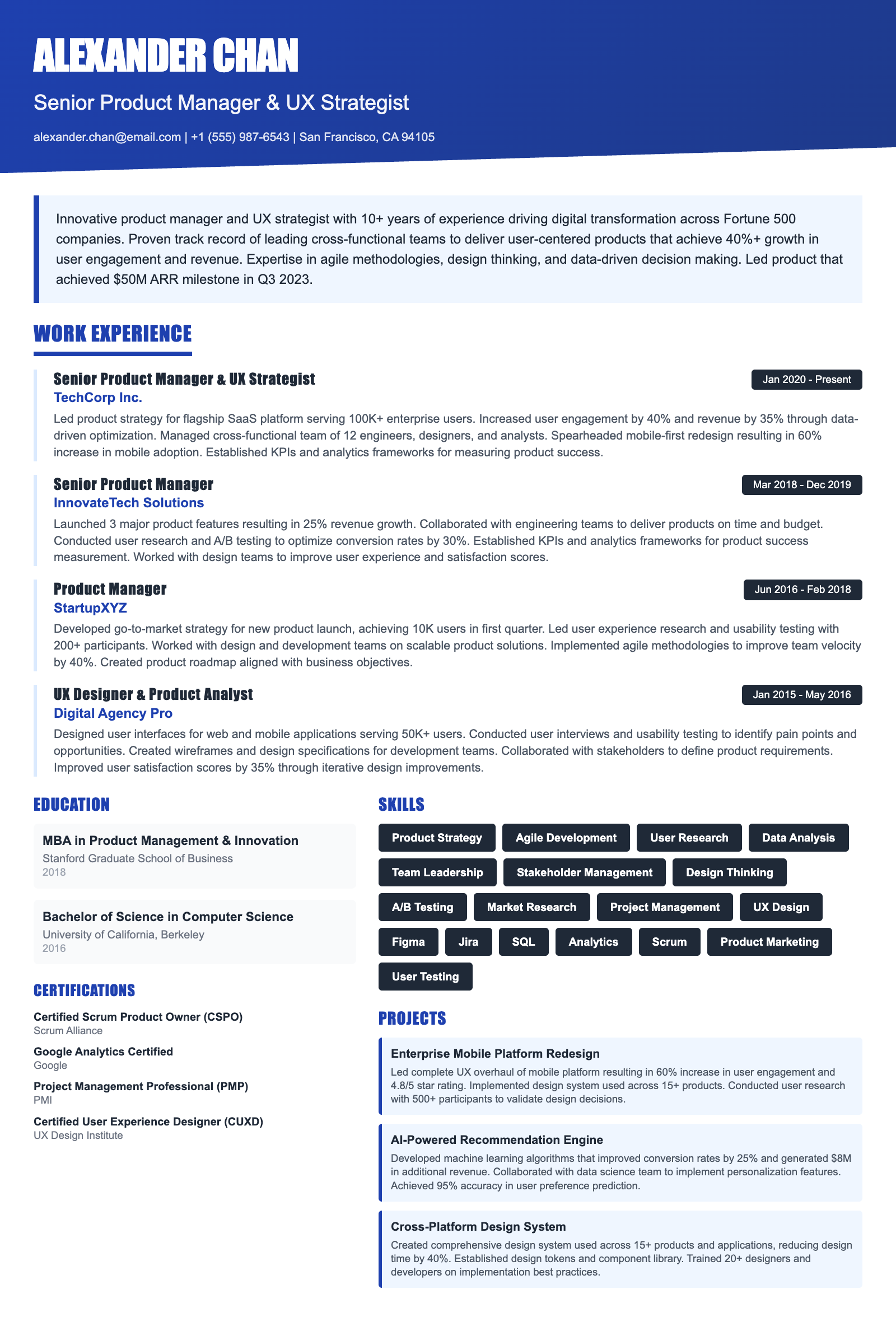
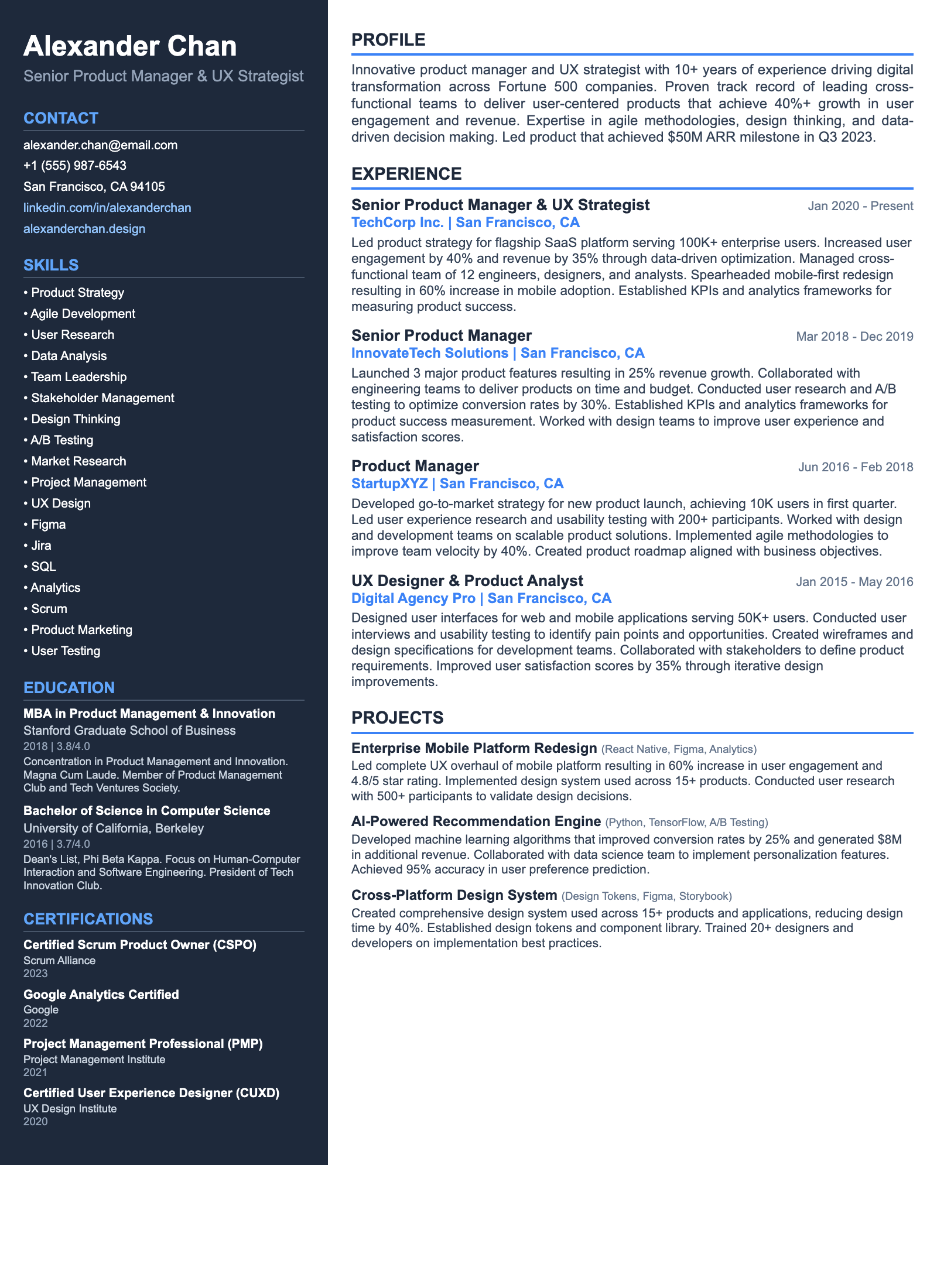
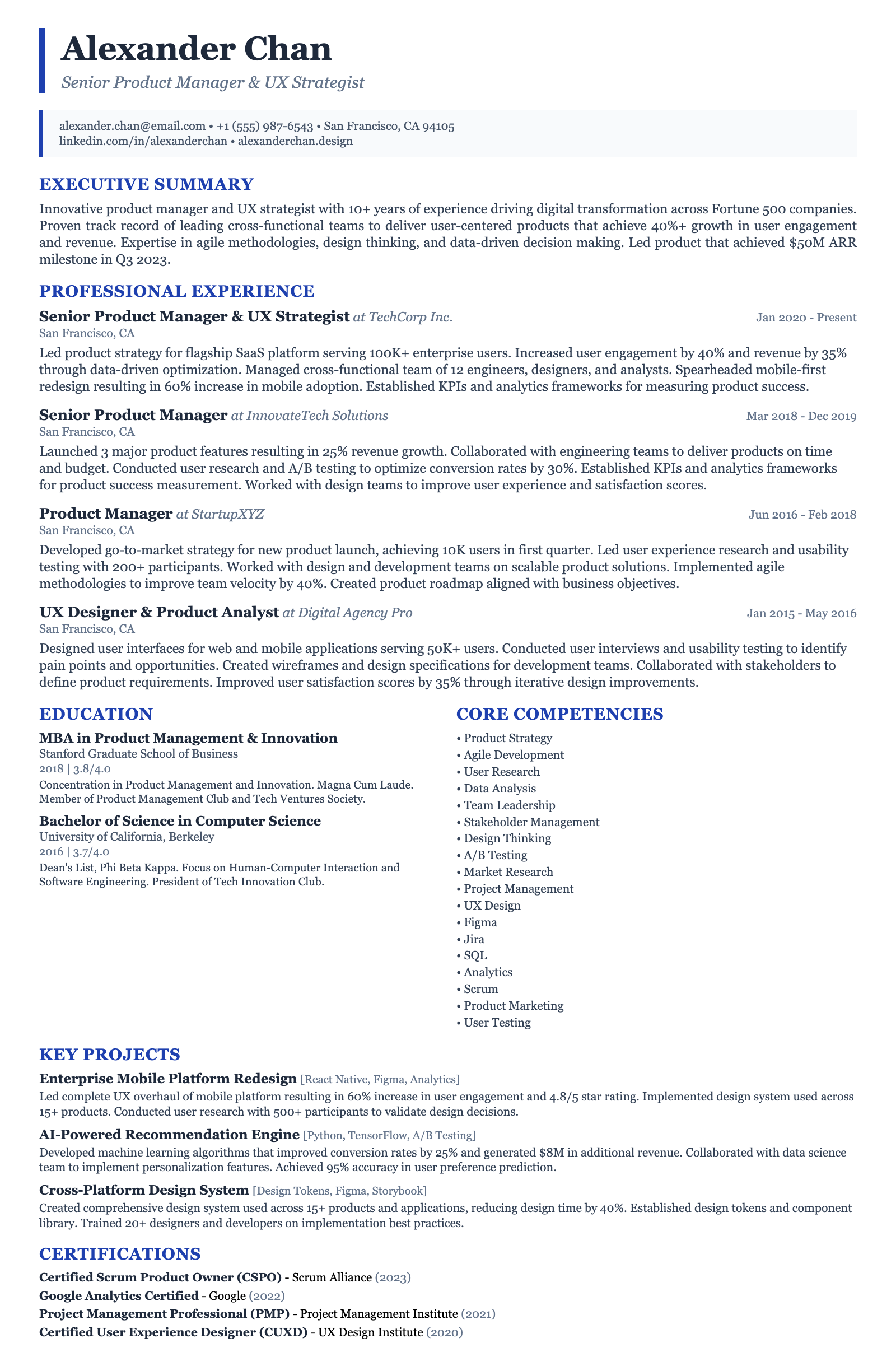
Recommended Resume Templates
ATS-friendly templates designed specifically for Entry-Level Education Data Scientist positions in the US market.
Frequently Asked Questions
What qualifications do I need for an entry-level education data scientist role?
A bachelor's or master's degree in a quantitative field such as data science, statistics, mathematics, computer science, or a related field is typically required. Strong analytical and problem-solving skills, experience with data analysis tools like Python or R, and familiarity with statistical modeling and machine learning techniques are also essential.
What skills are most important for success in this role?
The most important skills include data analysis, statistical modeling, machine learning, data visualization, SQL, and communication. A strong understanding of educational data and the ability to translate data insights into actionable recommendations are also valuable.
What is the typical career path for an education data scientist?
The typical career path progresses from entry-level data scientist to data scientist, senior data scientist, and eventually data science manager or director. With experience and continued learning, you can also specialize in specific areas such as educational research or data engineering.
What are the common challenges faced by education data scientists?
Common challenges include dealing with messy or incomplete data, navigating privacy concerns related to student data, communicating complex findings to non-technical stakeholders, and staying current with the latest developments in data science and educational research.
How can I prepare for an interview for an education data scientist role?
Prepare to discuss your experience with data analysis, statistical modeling, machine learning, and data visualization. Practice answering common interview questions using the STAR method and be prepared to explain your approach to solving data-related problems. Research the organization and its mission and be prepared to discuss your interest in the education sector.
What types of projects would I work on in this role?
You might work on projects such as predicting student success, identifying at-risk students, personalizing learning experiences, evaluating the effectiveness of educational programs, and developing data-driven insights to inform policy decisions.
Is prior experience in the education sector required?
While prior experience in the education sector is beneficial, it is not always required. A strong understanding of data science principles and a passion for using data to improve educational outcomes are often more important.
How is data science used to improve education?
Data science helps improve education by identifying at-risk students early, personalizing learning paths based on individual student needs, optimizing resource allocation, evaluating the effectiveness of teaching methods, and informing policy decisions with evidence-based insights.
Ready to Build Your Entry-Level Education Data Scientist Resume?
Use our AI-powered resume builder to create an ATS-optimized resume tailored for Entry-Level Education Data Scientist positions in the US market.